instrumentation
measurement · interpretation · exploration
Instruments for investigating life in extreme environments.
We develop optical instruments with either AI local on board or software easily operated by your preferred agents. All of our instruments in deployment are fully text and image → experiment ready. Our robotic field systems carry the same stack, to measure how surfaces respond to changing conditions through time.
what is spectrophage?
V1 · working prototype
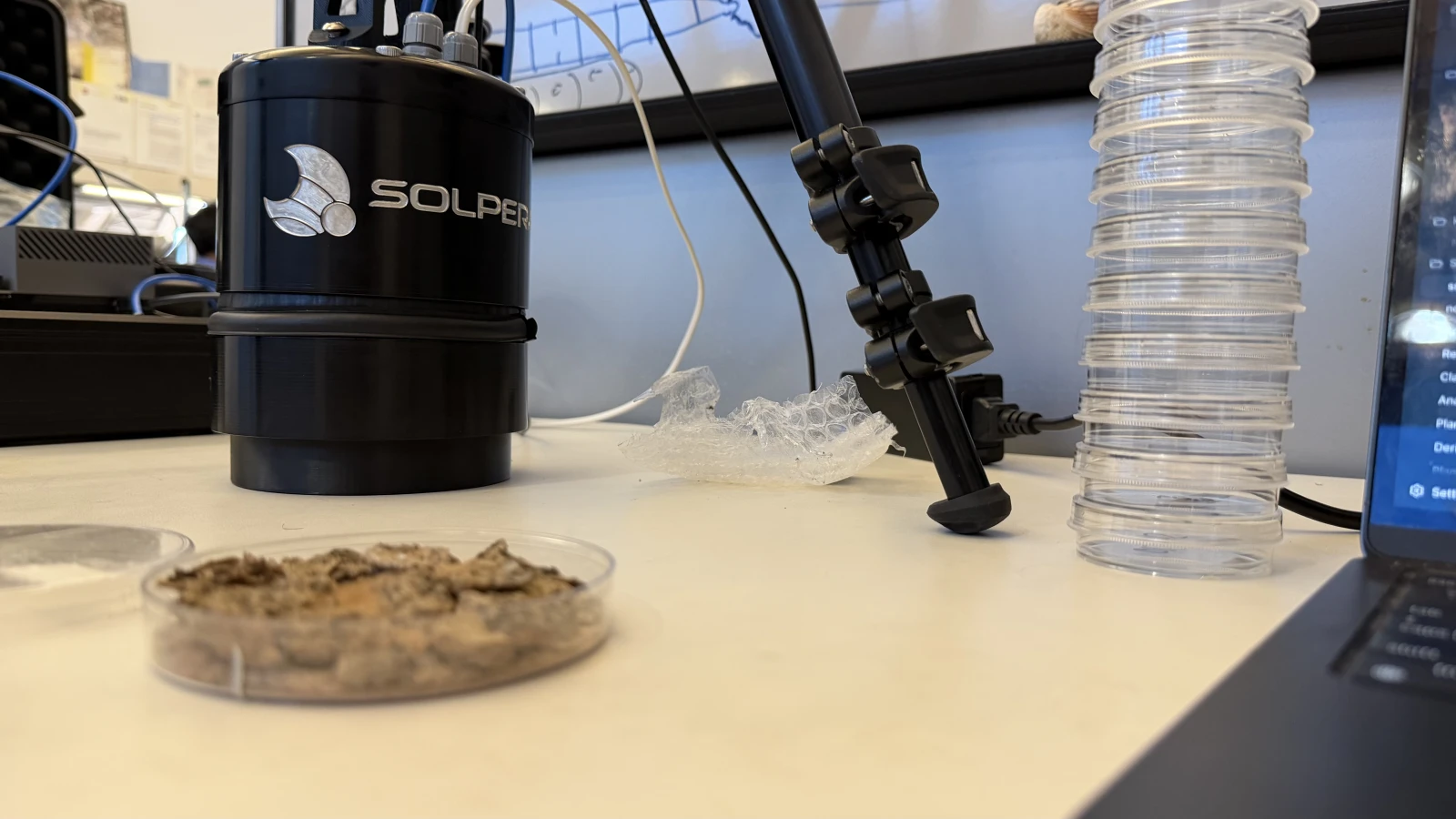
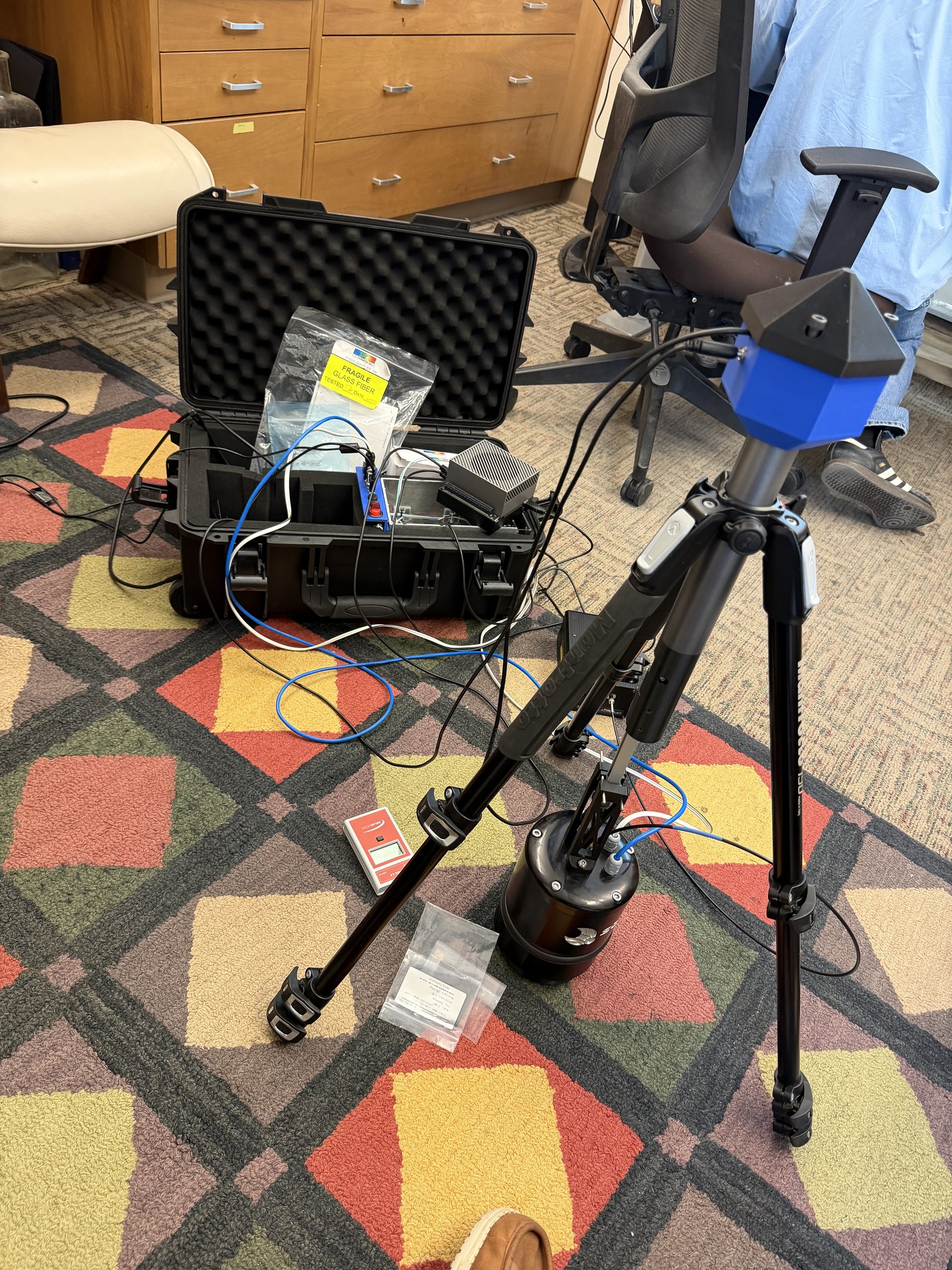
The Spectrophage is our first-generation biosignature sensor. It uses ultraviolet LEDs and a spectroradiometer to measure how material placed beneath its light-trapped dome reflects light across wavelength. It uses discrete UV-emitting channels, each independently controlled to illuminate a sample for the duration an experiment requires.
Matter absorbs and reflects specific wavelengths of light. Powered by the NVIDIA Jetson AGX platform, experimental workflows are automated with sequential signal band UV induction and full channel spectra acquisition.
Ultraviolet light is particularly interesting because of its high energy. By tracking a system's optical response over time, the Spectrophage can observe how that system changes as it is perturbed by controlled UV exposure.
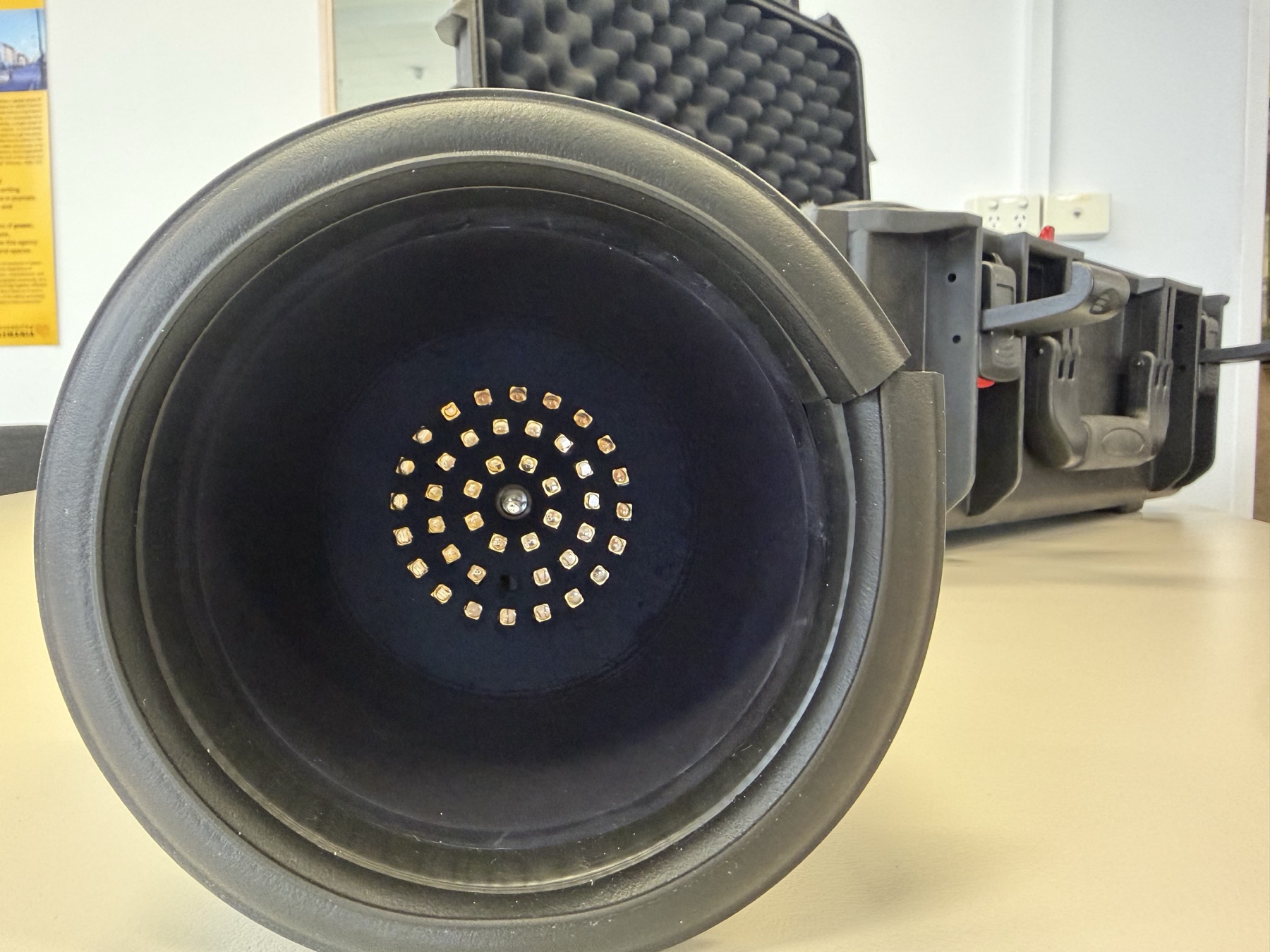
| illumination | Discrete UV-emitting channels · independently controlled |
|---|---|
| detector | full spectrum recorded under every channel · reflectance at fourteen wavelengths, 311–420 nm |
| calibration | every reading a ratio to a reference panel · our own instrument calibration: LED levelling, detector response from dim to bright, accuracy checks against further panels |
| onboard compute | NVIDIA Jetson AGX platform · AI assistant on board |
| capture | single · multi-hour · multi-day capture of a surface |
the assistant
onboard AI · runs on the instrument
The operator types: “Measure A, B and C, then put each under the 369 nm light for 5 min and measure it again.” The assistant drafts a plan for confirmation: targets A, B and C at 3 placements each, exposure set band by band, 369 nm light for 5 minutes with timepoints T0 and T+5 min, 10 spectra per target at each timepoint, and white standard and dark (lights off) references at the start. The panel notes: “Nothing changes until you confirm.” It ends: “Applied to the plan, with your edits.”
The Spectrophage software has an AI assistant built in. Describe an experiment in plain words and it drafts the plan on the page: the samples, the exposure, the light and the timing.
You edit anything and confirm. Nothing runs until you do. During a run it tells you what to place and when, and it cannot override the instrument's safety rules.
The model runs on the instrument's own computer, so the experiment and its data never need a connection.
spectrophage V2
the next generation · in development
The next generation of our ultraviolet instrument adds LiDAR and spatial measurement to study how light interacts with matter.
By mapping the shape and arrangement of a surface, V2 is designed to relate its optical response to geometry across a region. This brings spatial context to the study of how surfaces respond to changing conditions.
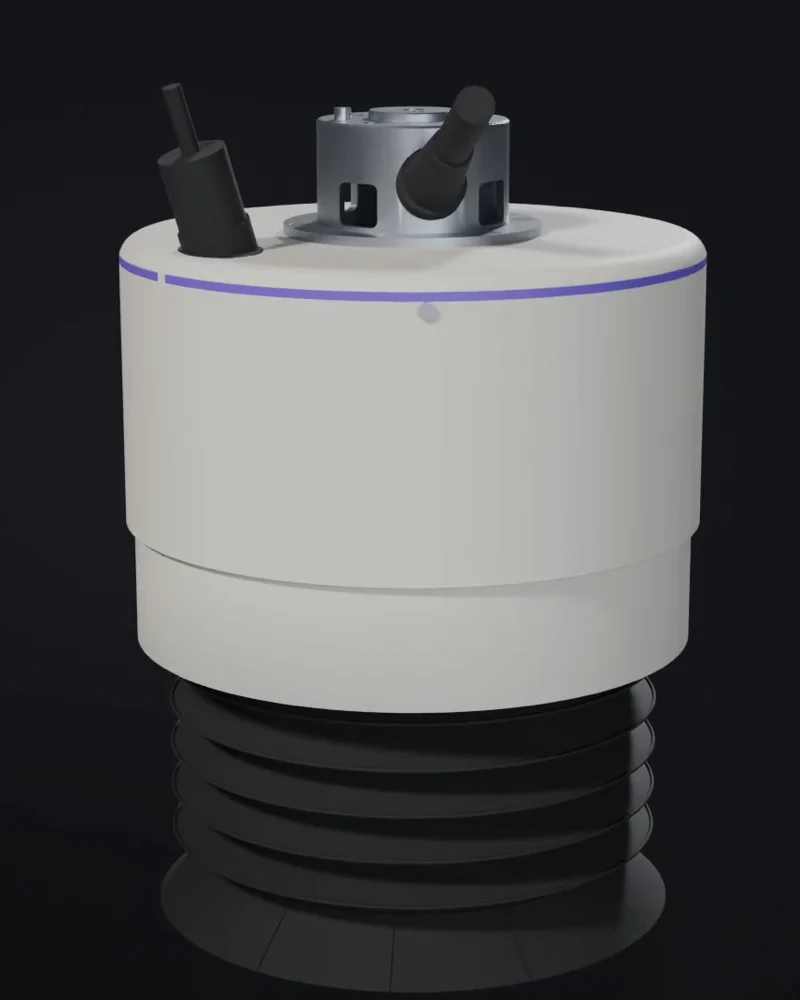
CAD render, October 2026
Completing the instrument, calibrating these measurements and testing repeatability in laboratory and field trials are the next steps.
what is atlas?
in development
Atlas is a modular payload system for robotic fieldwork, bringing RGB cameras, scientific sensors and onboard computing together in a backpack powered by the robot.
It carries the same onboard AI stack as the Spectrophage, built to collect and interpret data in the field and host AI agents on the robot. Payloads can be configured around the research question, with processing close to the sensors where a continuous connection to base is impractical.
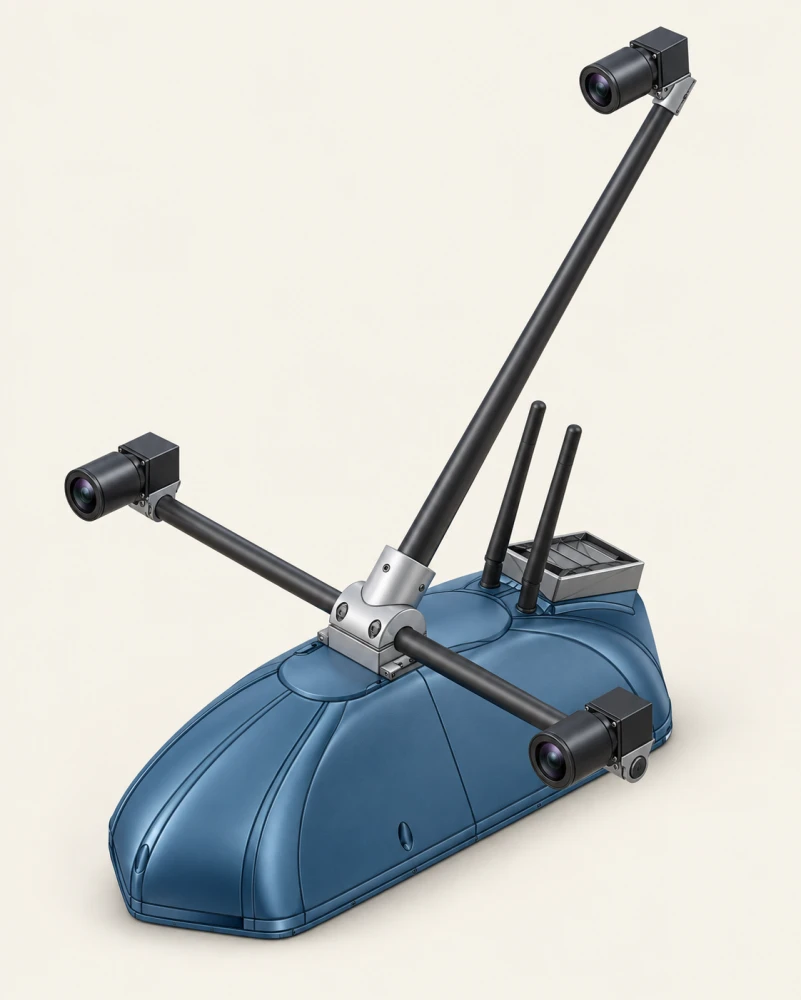
CAD-referenced design illustration
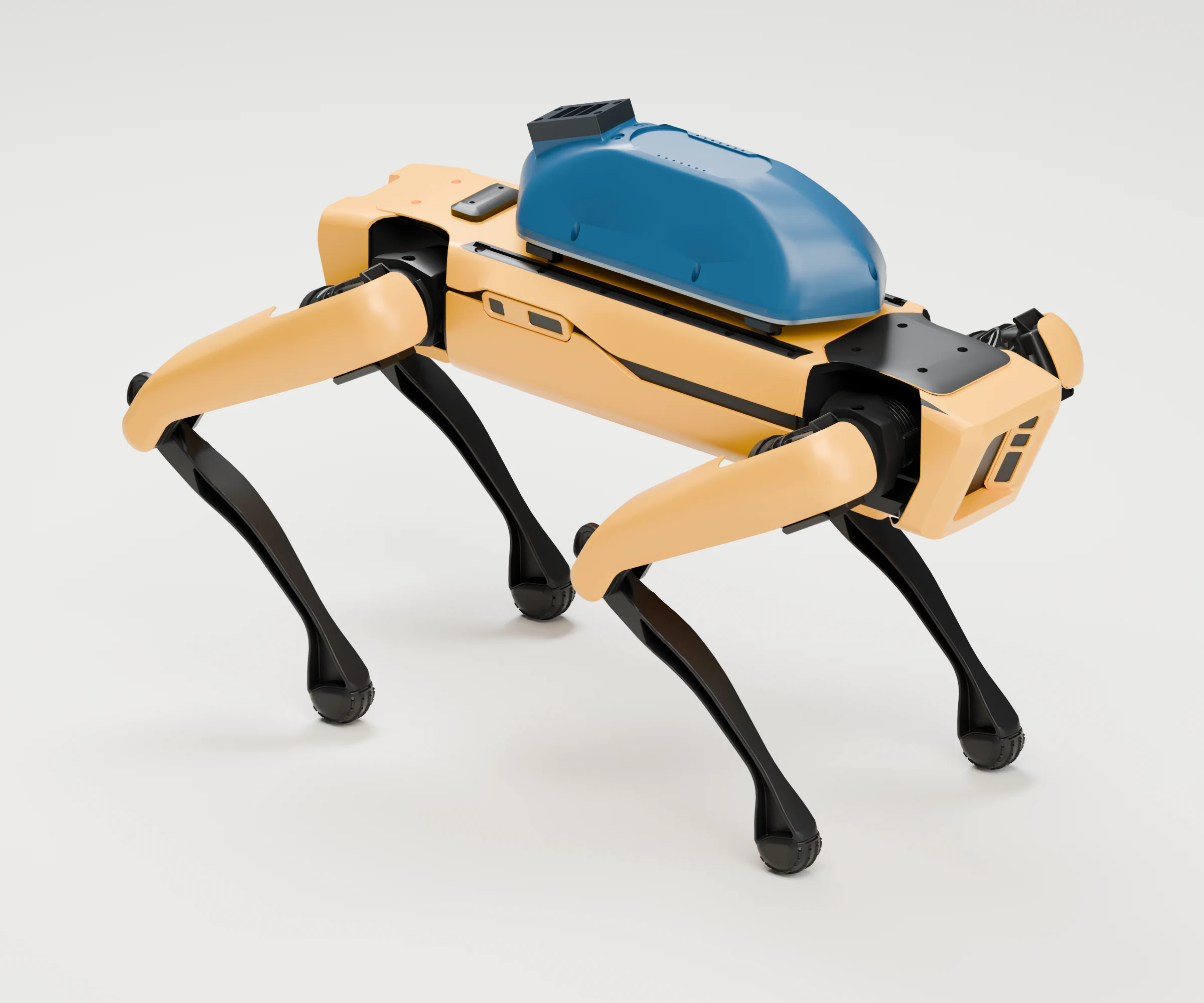
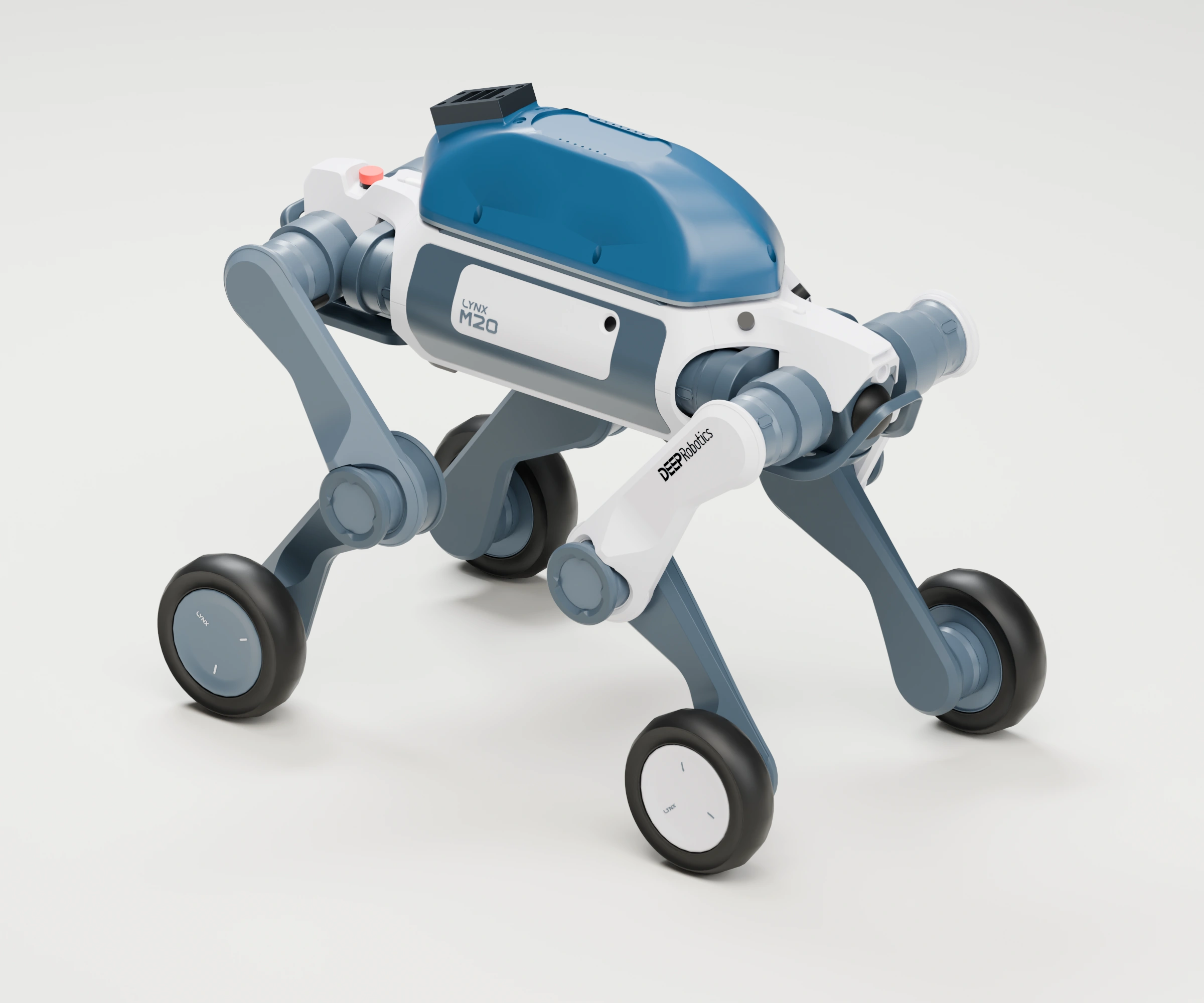
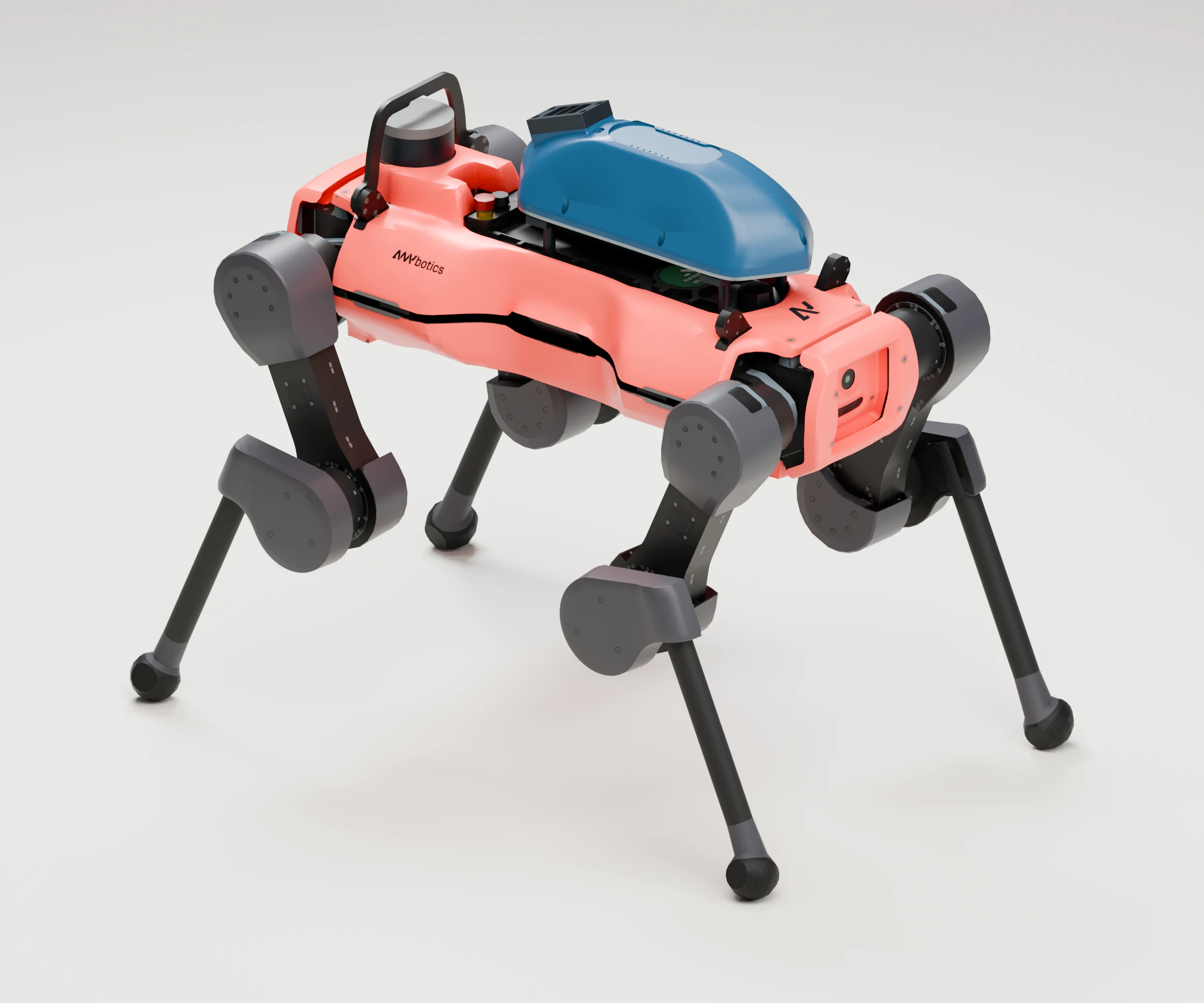
Atlas retains the same enclosure dimensions in each view. ANYmal compatibility remains under development. Model credits.
Development is focused on sensor, power and onboard-compute integration with Boston Dynamics Spot, followed by field trials. Atlas is designed to be quadruped agnostic, currently compatible with the Spot and M20, and a wider range of quadrupeds is part of the path to bringing Atlas to market.
| compute | NVIDIA Jetson AGX platform |
|---|---|
| capture | RGB cameras + scientific sensors · data collection |
| processing | onboard inference · portable AI agents · data interpretation |
| payloads | modular sensors, cameras and computing · quadruped integration |
future field systems
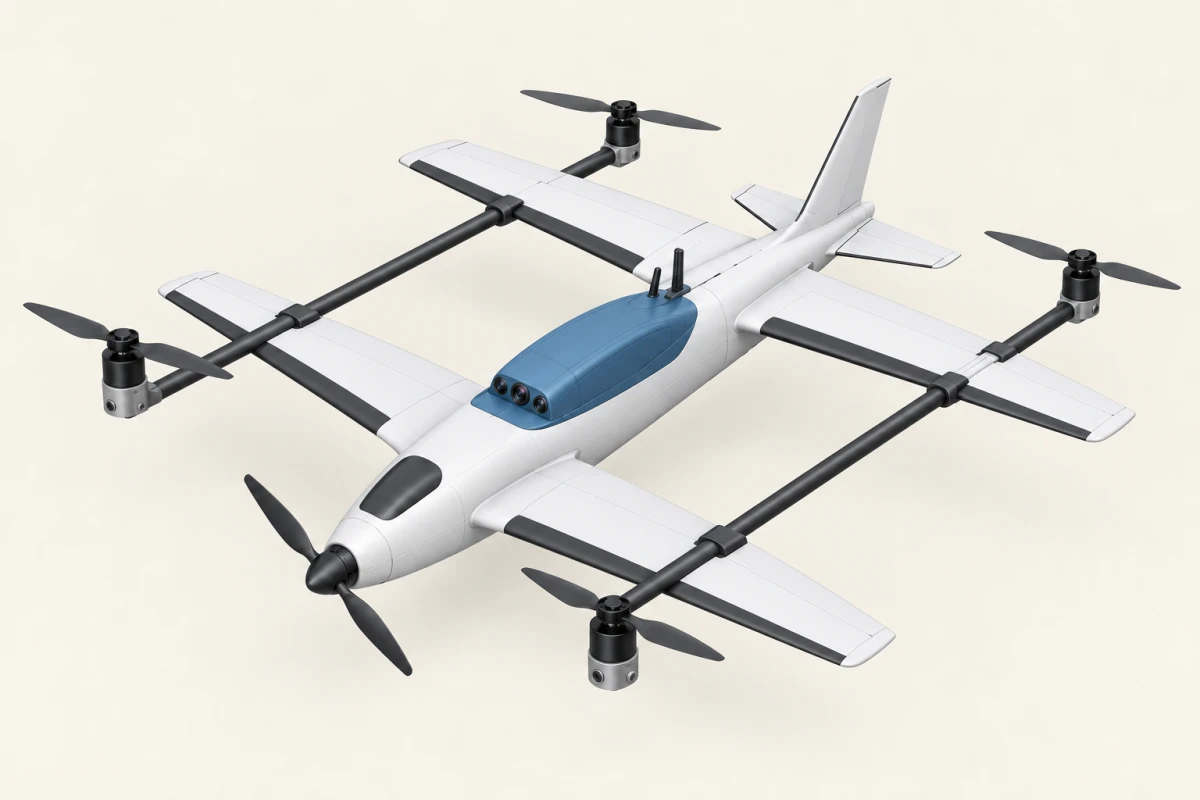
Aerial integration concept
Saber explores Atlas-derived sensing, onboard inference and high-speed computing for real-time decisions in the field. The aim is to support monitoring and exploration in regions that are difficult to reach.
A future integration concept. Aircraft integration and flight validation remain development work.